
Skip to content

Technical Explanation

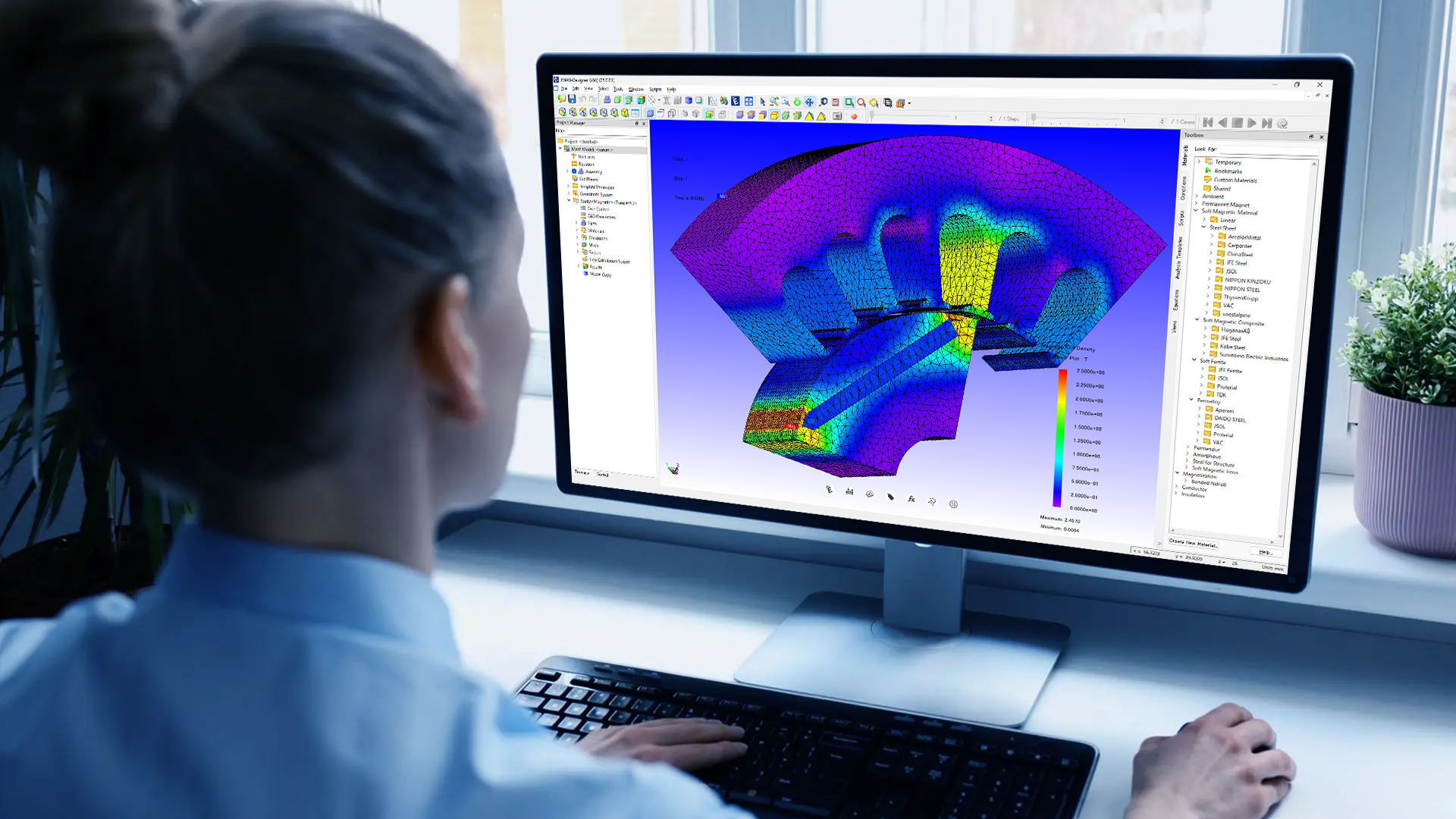
CAE encompasses a wide range of computer-based analysis tools used to evaluate product performance through numerical simulation. These include:

  • FEA (Finite Element Analysis) – for structural, thermal, and vibration analysis.
  • CFD (Computational Fluid Dynamics) – for studying airflow, fluid behavior, and heat transfer.
  • Multibody dynamics – for analyzing motion and mechanical interactions.
  • Optimization and fatigue analysis – for improving efficiency and durability.

In a typical CAD → CAE workflow, engineers import a CAD model, simplify it (feature recognition, defeature, remove hidden bodies, and more), generate a mesh, and define material properties and boundary conditions.

A robust geometry kernel and meshing engine are essential to ensure accurate model preparation, smooth data transfer, and high-quality simulation results.

Applications and Industry Use Cases

CAE plays a critical role across many industries that rely on performance-driven design:

  • Aerospace & Automotive – aerodynamic studies, crash and structural simulations.
  • Manufacturing – validation of components before production to reduce defects.
  • Energy – thermal and mechanical analysis of turbines, reactors, and pipelines.
  • Medical Devices – evaluating mechanical and fluid behavior of implants or instruments.

By enabling engineers to predict performance and detect weaknesses early, CAE reduces prototyping costs and shortens product development cycles.

Challenges or Common Pitfalls

The accuracy and reliability of CAE results depend heavily on the quality of the geometric model and mesh. Common challenges include:

  • Complex geometry preparation, requiring the removal of small or irrelevant details.
  • Data loss during the CAD-to-CAE translation process.
  • Poor mesh quality, leading to inaccurate simulation results.
  • High computational costs for large, detailed assemblies.

Maintaining data fidelity and ensuring high-quality meshing are crucial for consistent, trustworthy simulation outcomes.

How Spatial Helps

Spatial’s SDKs provide the essential tools to bridge CAD and CAE workflows:

  • 3D InterOp ensures accurate import of CAD models from multiple systems, preserving geometry and metadata for simulation use.
  • CGM Modeler and 3D ACIS Modeler support geometry simplification and defeaturing to prepare models for analysis.
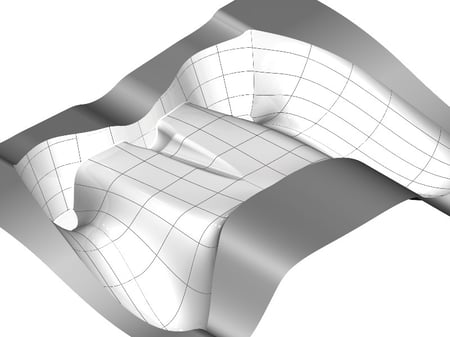
  • CSM CVM generates high-quality, simulation-ready meshes directly from B-Rep geometry.

Together, these components enable software developers to build CAE applications that deliver fast, reliable, and precise engineering analysis — directly from CAD data.