By integrating 3D ACIS Modeler, 3D InterOp, and HOOPS Visualize, LK Metrology streamlined CAD data processing, improved PMI/MBD support, and extended CAMIO’s capabilities. This collaboration ensured greater precision, efficiency, and long-term software reliability in metrology applications.

The Challenge
LK Metrology aims to uphold high standards in CMM precision through CAMIO software. To enhance accuracy and efficiency, LK Metrology is integrating Product Manufacturing Information (PMI) and Model-Based Definition (MBD) capabilities.
This initiative aimed to refine their practices
and broaden application functionality to meet evolving industry demands.

Working closely together with Spatial, not only strengthened our knowledge of PMI and our CAMIO software but also provided very valuable feedback to Spatial which helped to improve the Uconnect product, thereby making our product better in the end.
They Trust Us







Accelerate Development with Proven Spatial SDKs
Partnering with Spatial means leveraging industry-leading SDKs that enhance precision, interoperability, and efficiency in metrology software. Our proven components empower developers to integrate accurate CAD translation, advanced visualization, and powerful 3D modeling into their applications.

Seamless CAD Interoperability
Easily integrate and maintain support for the latest CAD formats with 3D InterOp, eliminating the burden of manual updates and ensuring a flawless data exchange experience.

Streamline Development
By leveraging proven SDKs, developers can focus on building unique value-added features rather than reinventing core functionalities, ensuring faster deployment and innovation in metrology applications.

Seamless User Experience
Deliver a streamlined and intuitive user experience by ensuring your software integrates seamlessly with machine operations. Spatial provides the essential tools to develop a single, cohesive application that supports the entire user workflow with precision and efficiency.
Leading 3D Innovation
With over 35 years of expertise, Spatial equips developers with cutting-edge tools powered by Dassault Systèmes' proven innovations, enabling the creation of world-class metrology solutions with precision and efficiency.
How Spatial SDKs Transform Metrology Software Development
Seamless PMI Import & Automated Inspection Planning
With 3D InterOp, metrology applications can extract Product Manufacturing Information (PMI) directly from CAD models, preserving design intent and enabling automated measurement plan generation. Customers leveraging PMI-based workflows experience up to 90% time savings in inspection setup.
Robust 3D Application Development Framework
The Application Graphics Manager (AGM) provides a comprehensive 3D application framework, integrating UI management, geometry undo/redo, rendering, and workflow control. It ensures a seamless development experience, reducing complexity while integrating spatial SDKs effortlessly.
Advanced Geometric Constraint Solver
With Constraint Design Solver (CDS), developers can simulate inverse kinematics of Coordinate Measuring Machines (CMMs) to optimize positioning and movement under geometric constraints, ensuring precision in automated measurement tasks.
upgrade your application
Features Built for Metrology Workflows
Spatial’s solutions have specific built-in functionality that targets the unique
needs of the metrology industry. Select capabilities include advanced functionality
for handling geometric data, support for large point clouds and support
of a rollback mechanism for handling undo/redo.
Capture Design Intent
Part Analysis
Generate Measurement Point
Annotation Analysis
Optimize Sensor Paths
Enhance Operational Safety with Strategic Path Planning
Collision Detection
Optimize Data Integration With Advanced Point Cloud Processing
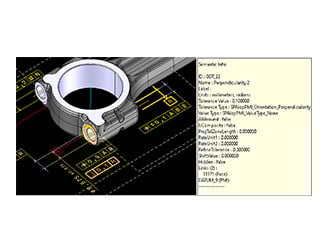
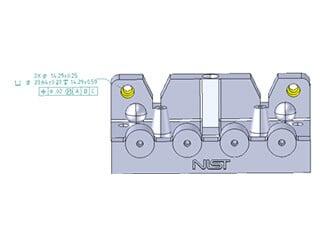
Capture Design Intent
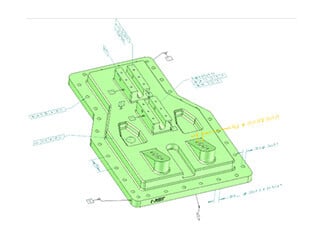
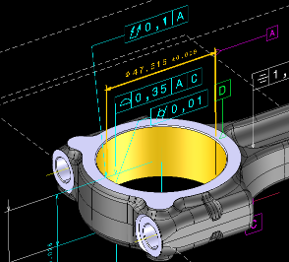
Seamlessly access and utilize original CAD annotations directly within the CAD environment, ensuring precise dimensioning and geometric relationships. This feature allows for directly verifying engineering tolerances and specifications, enhancing the accuracy of measurements and analyses. It supports a comprehensive understanding of geometric tolerances, their types, values and the specific faces or edges they pertain to, facilitating a thorough and efficient validation process.

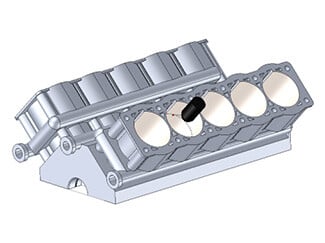
Part Analysis
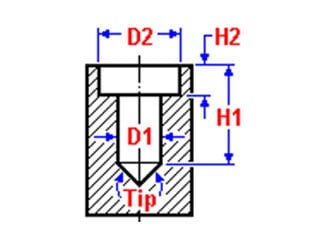
Automate measurement planning and generate insightful reports with an intuitive, geometry-based feature detection system. By analyzing face combinations, this advanced algorithm identifies and categorizes features such as holes, pads, pockets, fillets and chamfers. It simplifies the measurement process by clearly defining which geometries to measure, including face details and axis orientation. Additionally, it provides parametric definitions to anticipate measurement outcomes, covering aspects like diameters, depths and hole types (blind or through), streamlining the analysis for accuracy and efficiency.


Generate Measurement Point
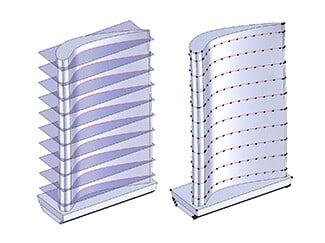
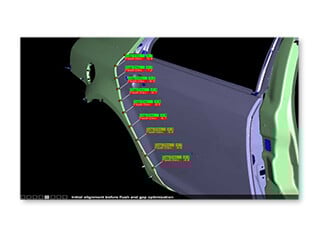
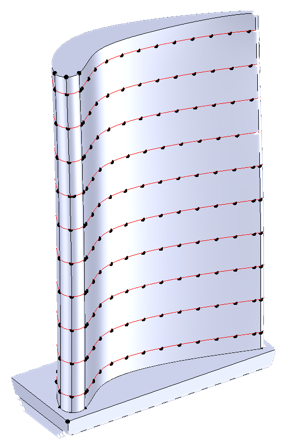
Precisely generate measurement points from the part's geometry by employing planar and non-planar slices as well as projection and offset operations to mark points on the model accurately. Efficiently create and optimize sensor paths on the nominal part. On parts, allowing for a detailed comparison of inspection measurement points against these curves, enhancing accuracy and ensuring quality control.
Annotation Analysis
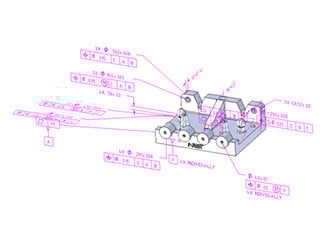
Facilitate precise part positioning for measurements using reference faces and DATUM information. Further refine measurement workflows by employing
compound PMIs, enabling the automatic grouping of measurement activities. This integration between feature detection and compound PMIs allows the efficient measurement of features that share annotations.
Optimize Sensor Paths
Leverage model geometry to automate optimize the creation of sensor paths by querying geometric objects, where evaluators calculate normals and curvatures at specific positions. This process generates sensor paths as a sequence of points along faces or edges, ensuring thorough coverage. This ensures thorough coverage along faces and edges.
Enhance Operational Safety with Strategic Path Planning
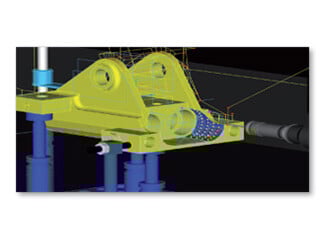
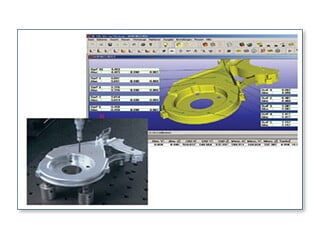
Mitigate the risk of clashes during processing the measurement and inspection process by creating ‘no-go’ regions around workpieces and machinery. This is achieved by offsetting bodies and enlarging their volume by a predetermined distance to ensure a safe operational buffer. Additionally, compensate for the touch probe radius during path generation by offsetting faces, which accurately determines the center locations of the touch probes. This careful planning not only safeguards the equipment as well as the part to inspect but also maintains the integrity of the measurement process, ensuring precise and reliable results.

Collision Detection
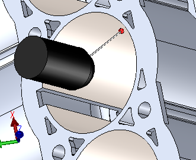
Implement advanced collision detection algorithms to preemptively identify potential clashes between the probe, fixtures, work-pieces and machinery, ensuring the integrity of the equipment and the items being measured. Utilize fast, parallel processing techniques suitable for real-time applications to maintain operational flow without sacrificing safety. Through off-line path planning, validate measurement plans in advance to avoid any risk of gouging the work-piece. Robust inverse kinematics algorithms also simulate end-effector (probe) position along the object being measured.
Optimize Data Integration With Advanced Point Cloud Processing
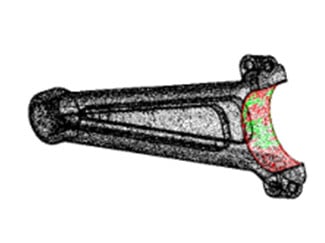
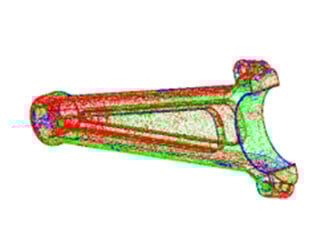
Utilize a two-stage alignment process combining inertia matrices and least squares fit to precisely align measured data with the 3D model. This method calculates distances for each point from the geometry, indicating their positional relationship with inside or outside status. Calculate the distances between the actual measurement points and the nominal part geometry and indicate for every measurement point its positional relationship with inside or outside status. Evaluate manufacturing accuracy by comparing measurements to tolerances
and identifying deviations such as ‘overcut’ or ‘undercut.’ Leverage a high-performance, parallelized architecture that efficiently handles large datasets, ensuring quick and scalable comparisons for effective analysis and quality control.
-2.webp?width=500&name=Additive-Manufacturing-spatial-feature%20(15)-2.webp)
1. CAD Data Import
- Fast Visualization Import
- Selective B-Rep Import
- Semantic and Graphical PMI
- CAD Associativity
2. Part Analysis
- PMI Analysis
- Feature Detection


3. Preparation
- Measurement Planning
- Feature Selection
- Dimensions
- Geometry Sampling

4. Processing
- Inverse Kinematics
- Clash Detection

5. Post-Processing
- Distance Calculations
- Result Visualization
- Report Generation