
Skip to content

Technical Explanation

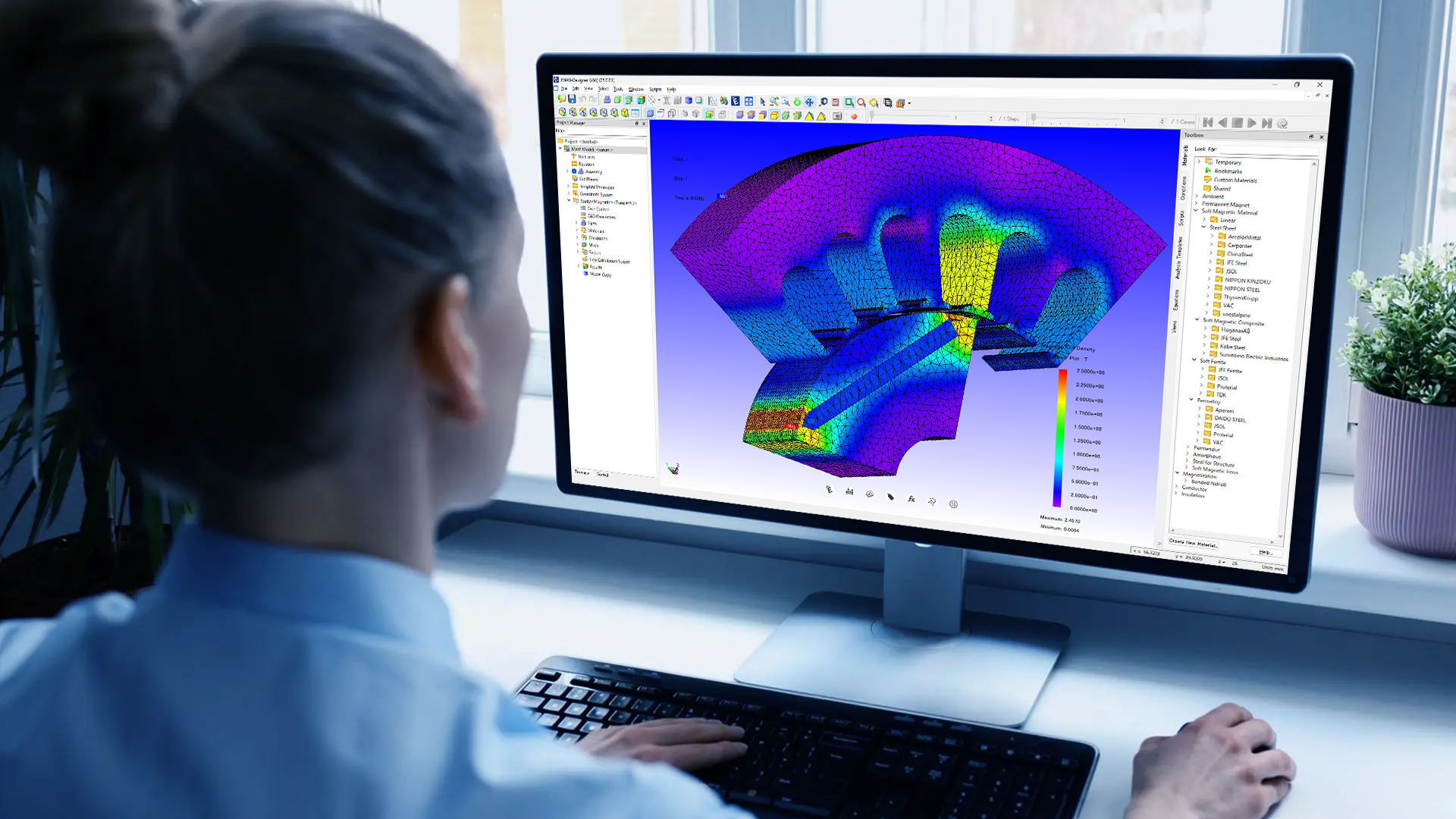
In CAD morphing, the model’s geometric entities — such as surfaces, curves, edges, and vertices — are displaced according to a vector field that defines how each point in space should move.

The Smooth Displacement Adjustment (SDA) algorithm computes these displacements while maintaining geometric continuity, ensuring that surfaces remain smooth (C1 or C2 continuity) and that topology is preserved.

This technique is often applied directly to B-Rep models, allowing deformations to propagate through the underlying mathematical representation rather than applying mesh-level approximations.

By operating at the geometric kernel level, CAD morphing supports high-precision transformations ideal for iterative design, simulation, or optimization workflows.

Applications and Industry Use Cases

CAD morphing is widely used in industries where geometry needs to adapt dynamically to performance or aesthetic requirements:

  • Shape optimization – refining designs for aerodynamics, strength, or thermal efficiency.
  • Reverse engineering – adjusting CAD models derived from 3D scans or measurement data.
  • Product customization – personalizing shapes based on ergonomic or stylistic variations.
  • Simulation-driven design – integrating morphing into optimization loops between CAD and CAE.

By enabling controlled geometric modifications, morphing reduces the need for manual remodeling and accelerates innovation cycles.

Challenges or Common Pitfalls

Implementing CAD morphing requires precise mathematical control to avoid degrading geometry or breaking topological relationships. Common challenges include:

  • Preserving continuity and curvature quality (C1/C2).
  • Managing deformation constraints to prevent distortion of key features.
  • Handling large or complex models with non-uniform deformation fields.
  • Maintaining numerical accuracy during repeated transformations.

Efficient morphing demands robust kernel-level algorithms that preserve model fidelity and precision across transformations.