Technical Explanation
A CAD import process involves reading and interpreting geometry, topology, and metadata from an external CAD file so that it can be used natively in another system.
This typically includes:
- Geometry and topology – solid and surface B-Rep data, curves, and meshes.
- Assembly structure – hierarchical relationships between parts and subassemblies.
- Metadata and attributes – colors, materials, units, and coordinate systems.
- PMI (Product Manufacturing Information) – dimensions, tolerances, and annotations.
- And more…
CAD import may occur through:
- Direct translation, where CAD data is read directly into the application.
- Intermediate translation, where CAD data is converted into neutral formats like STEP or IGES and then that format is read into the application.
Robust CAD import functionality is critical to maintaining data integrity, geometric precision, and associativity between original and translated models.
Applications and Industry Use Cases
CAD import supports a wide range of engineering and design workflows:
- Design (CAD) - designers may want to start with models created in other software to continue to evolve the design intent.
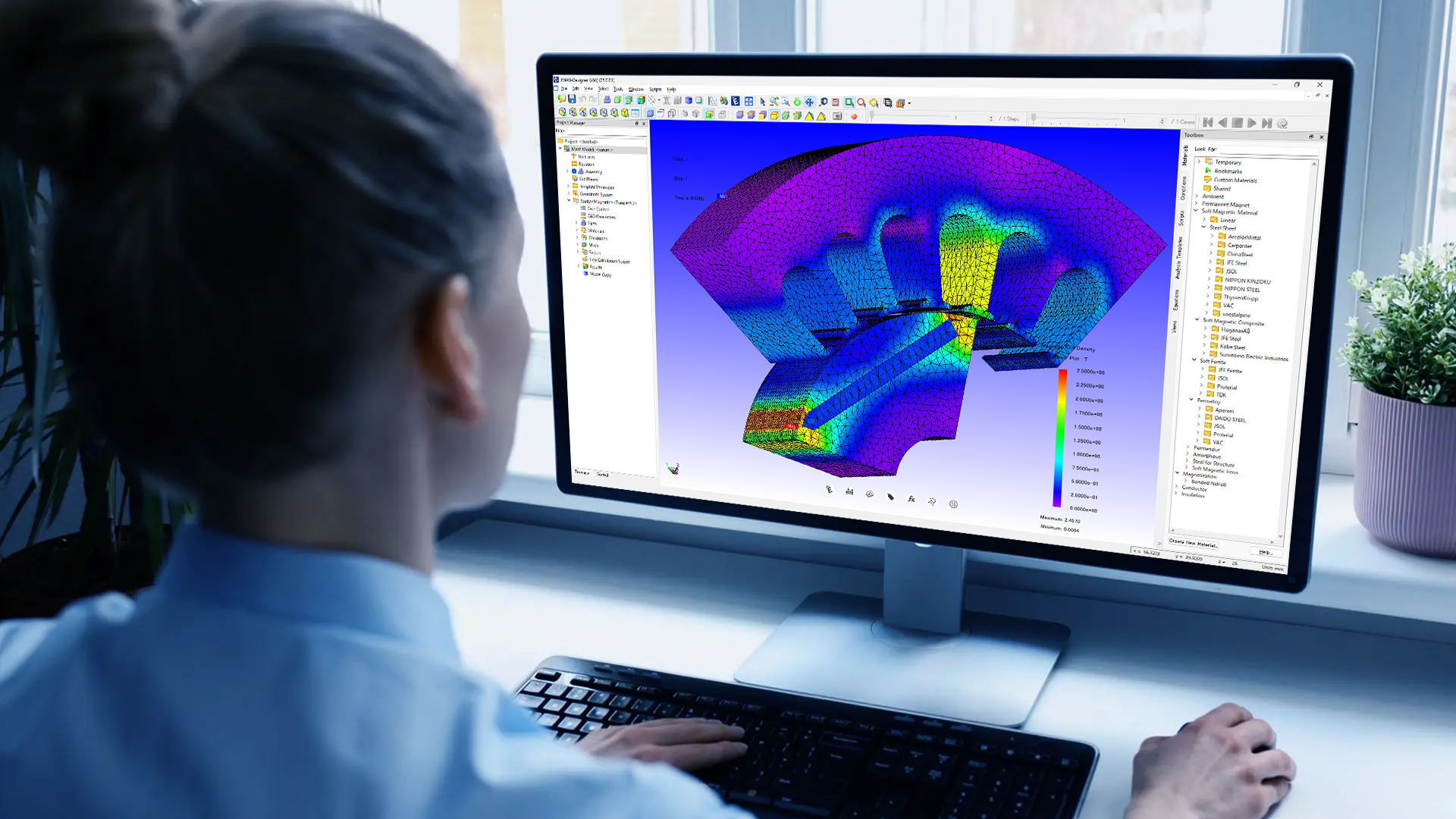
- Simulation (CAE) – importing geometry for meshing and structural or thermal analysis.
- Manufacturing (CAM) – reusing CAD geometry to generate toolpaths and machining operations.
- Visualization and Collaboration – viewing, annotating, and reviewing models without needing the original CAD software.
- Multi-CAD Development – combining models from different CAD environments to streamline product development.
By eliminating the need for multiple CAD licenses, CAD import capabilities promote more open, collaborative, and cost-efficient design ecosystems.
Challenges or Common Pitfalls
Importing CAD data between systems introduces technical challenges:
- Precision and topology loss when converting between different geometry kernels.
- Metadata and PMI misalignment during import.
- Broken references or constraints in complex assemblies.
- Performance bottlenecks when handling large or detailed models.
High-quality CAD import solutions must preserve model accuracy, maintain hierarchical relationships, and manage units, attributes, and annotations consistently.
How Spatial Helps
Spatial’s 3D InterOp SDK delivers powerful CAD import capabilities, allowing developers to read and reuse geometry from major CAD formats such as CATIA, SOLIDWORKS, Creo, NX, and Inventor — without needing software-specific licenses.
3D InterOp preserves the full fidelity of the model, including geometry, topology, PMI, and metadata, ensuring accurate integration into downstream applications.
Combined with CGM Modeler or 3D ACIS Modeler, imported data can be used for modeling by applying additional modeling operations like boolean, fillet, and chamfer, analysis by preparing the model for meshing, or manufacturing by editing the design for manufacturability.
For applications on the desktop, HOOPS Visualize can help easily display the model while HOOPS Communicator enables seamless visualization of imported CAD models directly on the web.

-1.webp)

















.png?width=450&name=AdobeStock_188705270%20(2).png)