
Skip to content

Technical Explanation

CAD file formats vary depending on the software and purpose of the design. They define the internal structure used to store geometry (B-Rep, surfaces, curves), topology (connections between faces and edges), and non-geometric data such as materials, PMI (Product Manufacturing Information), and assembly hierarchies.

In general, CAD file formats can be grouped into three main categories:

  • Native formats, such as CATPart (CATIA), SLDPRT (SOLIDWORKS), or DWG (AutoCAD), created by a specific CAD system.
  • Neutral or exchange formats, such as STEP, IGES, or JT, designed to enable interoperability between different CAD software.
  • Mesh-based formats, like STL, OBJ, and 3MF, which represent tessellated models for visualization or 3D printing.

Applications and Industry Use Cases

CAD file formats are used across industries for storing and exchanging 2D and 3D design data:

  • Product Design & Manufacturing – modeling mechanical parts and assemblies.
  • Architecture & AEC/BIM – creating construction drawings and architectural models.
  • Additive Manufacturing – exporting 3D models for printing and prototyping.
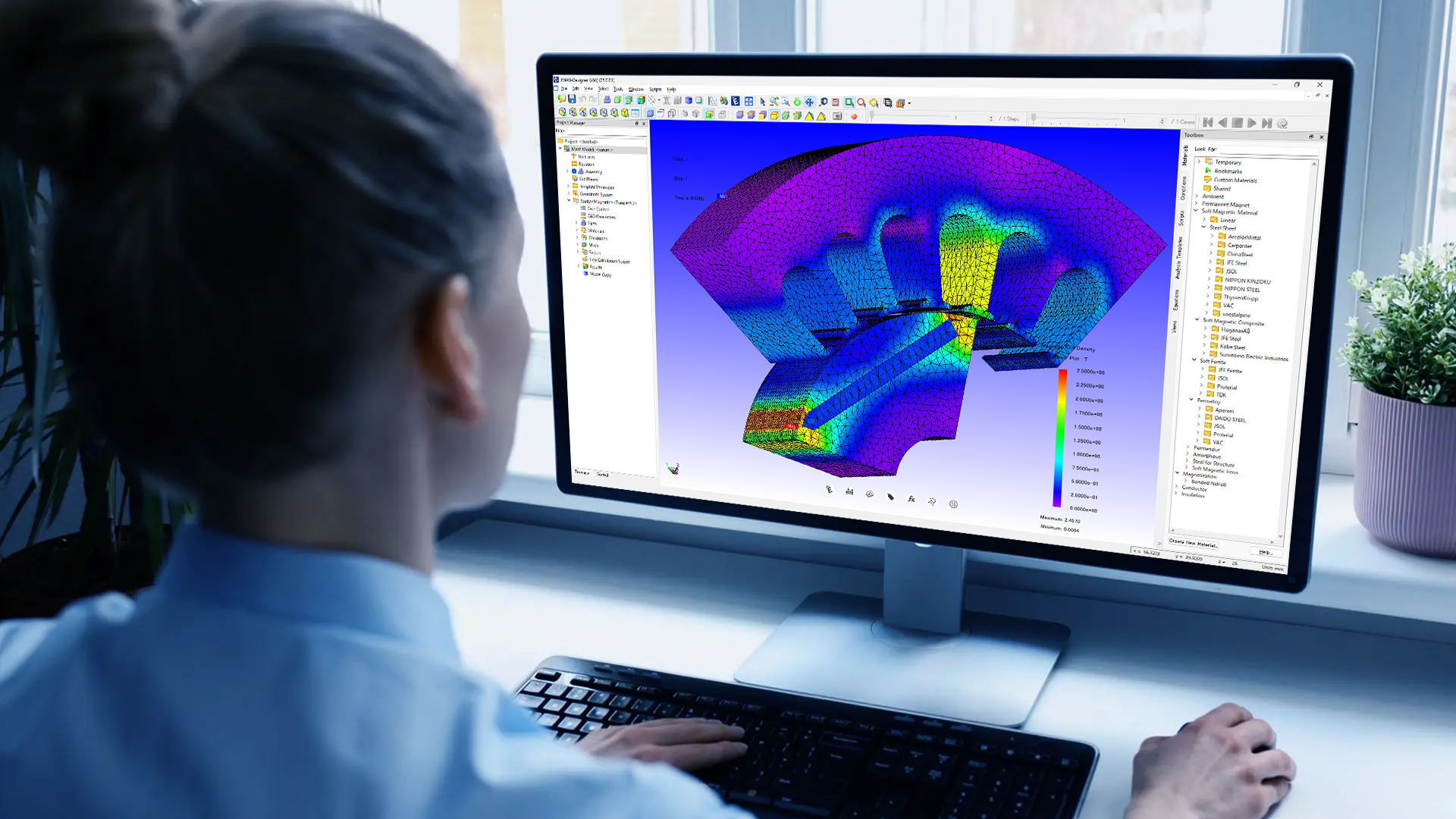
  • Simulation (CAE) – reusing CAD geometry for finite element analysis and testing.

By defining consistent file structures, CAD file formats enable engineers and designers to collaborate efficiently across platforms and disciplines.

Challenges or Common Pitfalls

The wide variety of CAD file formats introduces interoperability challenges:

  • Proprietary formats can make data exchange between systems difficult.
  • Converting between file types may cause geometry or metadata loss.
  • Different software versions or kernels can interpret data inconsistently.
  • Maintaining topology, PMI, and material information across conversions is technically complex.

These challenges make robust data translation and validation tools essential for reliable multi-CAD collaboration.

How Spatial Helps

Spatial’s 3D InterOp SDK provides comprehensive support for reading and writing more than 40 CAD file formats, including both native and neutral types.

It preserves geometry, topology, and PMI data with high fidelity, enabling seamless import, export, and translation between major CAD systems such as CATIA, SOLIDWORKS, NX, Creo, and Inventor.

Combined with CGM Modeler or 3D ACIS Modeler, 3D InterOp allows developers to import CAD data directly into their modeling, simulation, or visualization workflows. Translated models can then be viewed on the desktop through HOOPS Visualize or in the browser via HOOPS Communicator