What is extrusion?
Extrusion converts raw stock into a long profile whose cross-section is defined by the die opening. In aluminum processing, a solid billet is pushed by compression through a smaller die opening. In melt-processable polymers, the material is driven through tooling that defines the final section.
Because the cross-section stays constant along the length, extrusion is well suited to long parts and stock shapes.
How does it work?
The exact workflow depends on the material system, but process control always matters. For aluminum extrusions, several factors influence the properties of the final product:
- Die design
- Alloy
- Billet length
- Billet and tooling temperature
- Extrusion speed
That mix of variables is why extrusion is treated as both a forming process and a process-engineering problem.
What kinds of products does extrusion produce?
Extrusion is especially useful for making long parts and stock shapes with a constant cross-section. In fluoropolymer processing, it is commonly used to make semi-finished products such as rods, plates, tubes, pipes, hoses, profiles, and wire coatings. Those intermediate forms may then be machined or assembled into final components.
Why is extrusion widely used?
Its main advantages are cross-sectional design freedom, efficient production of continuous lengths, and good control over surface and profile quality. Industry guidance for extruded products includes dedicated tolerances for flatness, contour, angularity, and surface roughness, which shows how central dimensional and surface control are to the process.
Applications and Industry Use Cases
Extrusion is widely used in transportation, construction, industrial equipment, piping, cable insulation, and high-performance plastics. Aluminum extrusions are commonly turned into structural or finished components after secondary operations, while fluoropolymer extrusions are used where chemical resistance, electrical insulation, purity, or temperature performance matter.
For engineering software developers, extrusion is also an important product concept because many real parts begin life as extruded stock or are designed around constant-section profiles. That makes extrusion-relevant geometry common in CAD, CAM, simulation preparation, and downstream manufacturing workflows.
Challenges or Common Pitfalls
A common mistake is to think extrusion directly produces a finished part. In many real workflows, the press output is only an intermediate form, and downstream operations such as cutting, machining, punching, bending, welding, or other finishing steps are still required.
Another pitfall is underestimating process sensitivity. Die design, temperature, speed, and material selection all affect the final result, and fluoropolymer extrusion in particular can be challenging enough that manufacturers treat process optimization as a major quality issue.
It is also easy to oversimplify the phrase "good surface finish." Extruded products can achieve strong surface-quality results, but that depends on process control and tolerance requirements. Standards for extruded profiles explicitly account for roughness, contour deviation, and surface-related conditions such as die lines and handling marks.
How Spatial Helps
Spatial works on the geometry-creation side of extrusion, not the factory press itself. In a CAD model, extrusion is a sweep operation: the kernel sweeps a 2D profile along a path to create a solid or surface with a defined cross-section.
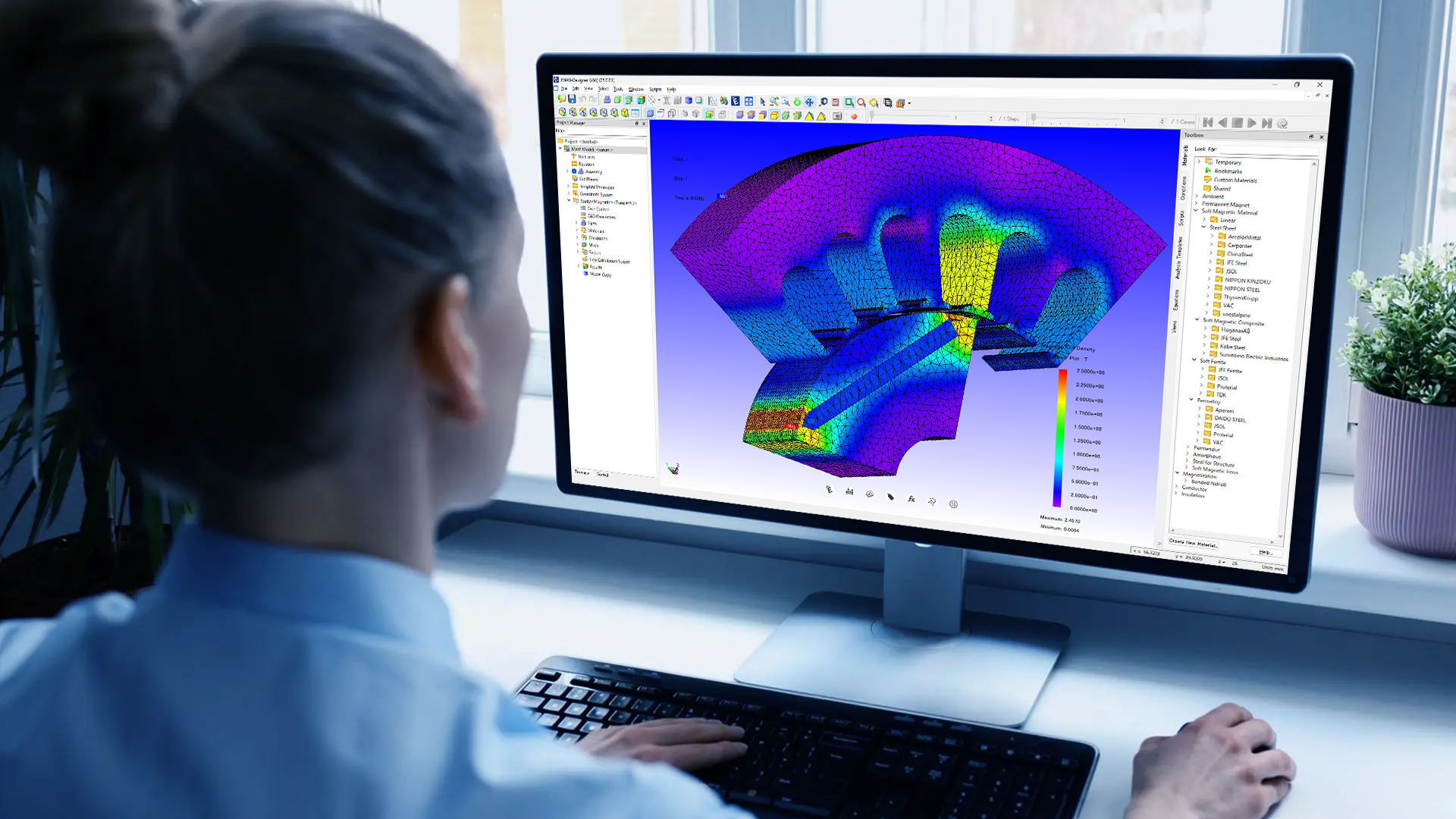
The 3D ACIS Modeler creates and manipulates this geometry. It builds extruded and swept bodies for precise geometry creation, and it carries those shapes into downstream engineering, simulation, and manufacturing workflows. So when a CAD, CAM, or CAE application needs to create extruded geometry, reuse imported data, or push those shapes into analysis, ACIS handles the modeling.
Extrusion also connects to nearby modeling operations in the same stack. Sweep generalizes extrusion by running a profile along any open or closed path, and Lofting blends between multiple cross-sections for shapes that change along their length.

-1.webp)
















.png?width=450&name=AdobeStock_188705270%20(2).png)